Standard Pallet Size in Australia: A Practical Guide for Queensland Freight
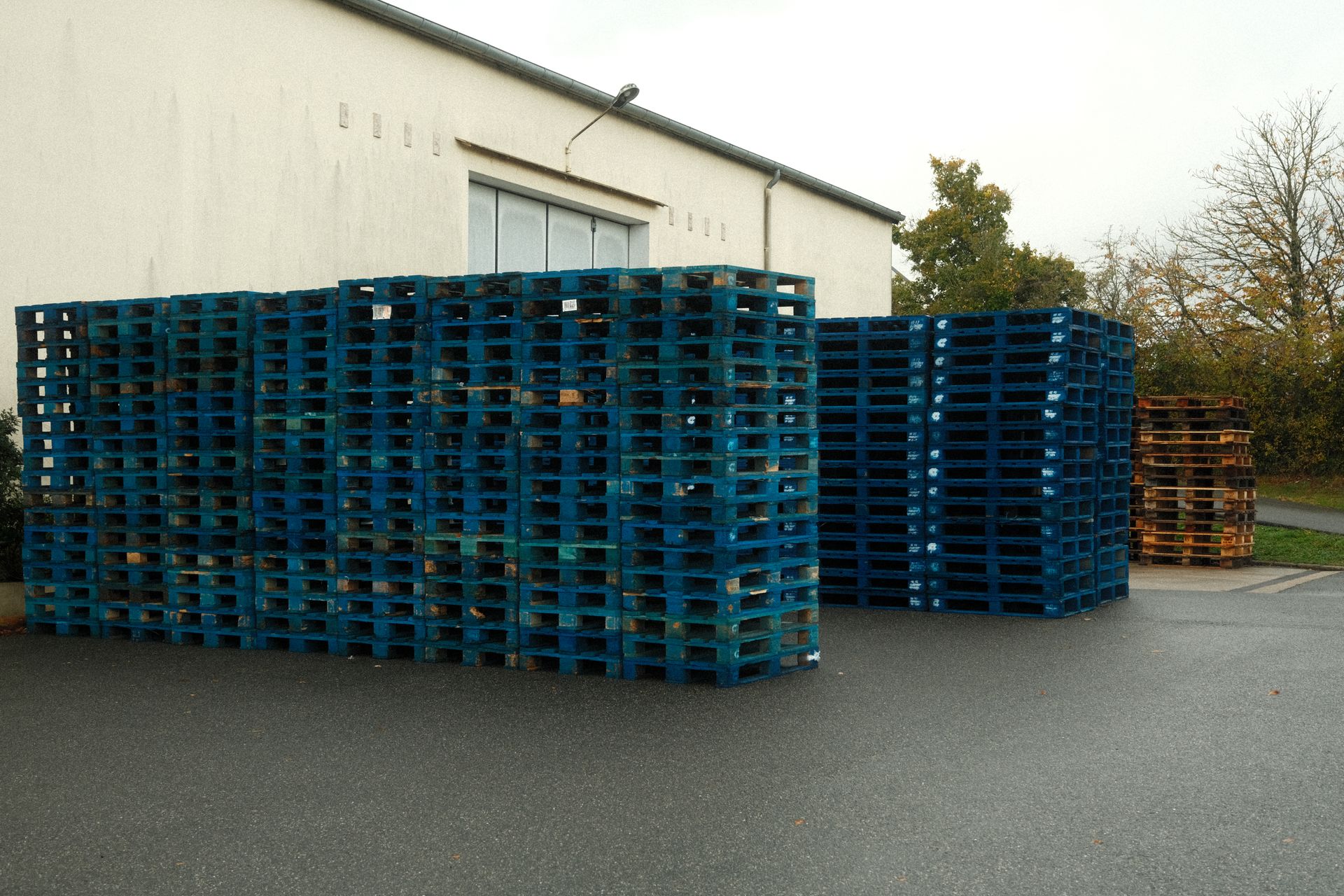

If your business sends goods by road, the pallet is the starting point for almost everything that follows. It affects how your freight is quoted, how it is loaded, how much fits on a truck and how it is stored when it arrives.
Australia also uses a pallet size that is different from most of the world. Businesses that import goods, buy pallets from overseas suppliers or work with international partners often find this out the hard way.
This guide explains the standard pallet size in Australia, why it is different, the other sizes you may come across, and how to prepare palletised freight so it moves smoothly across Queensland.
What Is the Standard Pallet Size in Australia?
The Australian standard pallet measures 1165 mm x 1165 mm. It is a square pallet, which sets it apart from the rectangular pallets used in Europe and North America.
Most standard pallets in Australia are around 150 mm high, although the exact height can vary slightly with the type of pallet and how it was built.
When people talk about the Australian pallet size, this is the one they mean. It is the size most warehouses, racking systems, forklifts and road freight operators in Queensland are set up to handle.
Why Is the Australian Pallet a Different Size?
The Australian standard pallet was designed around the country's railway freight containers. Its dimensions allowed two pallets to sit side by side inside those containers, which made rail and road transport more efficient at the time.
The size stuck. Over the following decades, Australian warehouses, racking, trailers and pallet pooling systems were built around the 1165 mm square footprint. Today it remains the default size for domestic freight, even though many other countries use different standards.
Common Pallet Sizes Used in Australia
While the 1165 x 1165 mm pallet is the standard, Queensland businesses may still come across several other sizes.
Australian standard pallet: 1165 mm x 1165 mm
The default for domestic road freight, warehousing and retail distribution. Most Australian pallet pools supply this size.
ISO pallet: 1100 mm x 1100 mm
A square pallet often used for goods shipped in international sea containers, because it makes better use of the container floor. It is also common in parts of Asia.
European (Euro) pallet: 1200 mm x 800 mm
The standard in much of Europe. Imported goods sometimes arrive on Euro pallets.
ISO / UK pallet: 1200 mm x 1000 mm
Widely used in the UK and parts of Europe and Asia.
North American pallet: 48 x 40 inches (approximately 1219 mm x 1016 mm)
The common size in the United States and Canada.
Half and quarter pallets
Smaller pallets are often used for retail displays and lighter consignments. Sizes vary, so always measure them rather than assuming.
If your goods arrive from overseas on a non-standard pallet, it is worth checking with your warehouse and your transport provider before they are moved on. A pallet that does not suit the racking or trailer layout can take up more space than expected and may need to be quoted differently.
CHEP, Loscam and Pallet Pooling
Many Australian businesses do not own their pallets. Instead, they hire them through a pallet pooling company.
The two names you will see most often are CHEP, whose pallets are blue, and Loscam, whose pallets are red. Both supply pallets in the Australian standard size.
Pooled pallets remain the property of the pooling company. As goods move through the supply chain, responsibility for each pallet moves too, and businesses usually need to record transfers so they are not charged for pallets they no longer have.
A few practical tips:
- Record pallet type and quantity on your consignment paperwork
- Check whether your receiver will exchange or transfer pallets on delivery
- Keep pooled pallets separate from your own timber pallets
- Report damaged pooled pallets rather than reusing them for freight
Pallet accounting is a small detail that can create avoidable costs when it is not managed.
How Many Standard Pallets Fit on a Truck?
This depends on the vehicle and trailer, but the square shape of the Australian pallet makes the maths fairly simple.
Most Australian trailers are wide enough to carry two standard pallets side by side. Length is then the main limit. As a general guide, a standard semi-trailer of around 13.7 metres is commonly quoted as carrying about 22 Australian standard pallets on the floor, with longer trailers carrying more.
Rigid trucks carry fewer pallets, depending on body length.
Keep in mind that floor space is only part of the picture. The number of pallets a truck can carry also depends on:
- The weight of each pallet
- Legal mass limits for the vehicle
- Whether pallets can be stacked
- The height of each loaded pallet
- How the load needs to be restrained
- Whether freight is chilled, frozen or dry
For temperature-controlled freight, airflow around the load also matters, so the loading pattern may be different from a dry freight load.
Pallet Size, Weight and Freight Pricing
Pallet dimensions play a direct role in how road freight is quoted.
When you book palletised freight, your transport provider will usually ask for:
- The number of pallets
- The length, width and height of each loaded pallet
- The gross weight of each pallet, including the pallet itself
- Pickup and delivery locations
- Whether the goods can be stacked
- Any special handling requirements
A pallet's footprint determines how much floor space it uses on the trailer. If goods overhang the edges of the pallet, they can take up more room than a standard pallet and may be charged accordingly.
Height matters too. A pallet that is too tall to stack, or too fragile to have anything placed on top, uses the full height of that space in the trailer.
Accurate details at the time of booking help avoid delays, re-quotes and surprise adjustments. For a broader look at what affects freight costs, see our guide to the 6 factors that influence logistics carrier prices.
How to Prepare a Pallet for Road Freight
A well-built pallet protects your goods and makes loading quicker and safer. Here are the basics.
1. Start with a sound pallet
Check for broken boards, protruding nails or missing blocks. A damaged pallet can collapse under load or be refused at pickup.
2. Keep goods within the pallet footprint
Stack cartons so nothing overhangs the edges. Overhang increases the risk of damage and can affect how much space your freight uses.
3. Put heavy items on the bottom
Place the heaviest cartons on the base and lighter items on top. This keeps the centre of gravity low and makes the pallet more stable.
4. Stack in a stable pattern
Interlocking or brick-style stacking patterns help cartons support each other and reduce movement during transit.
5. Wrap and secure the load
Use stretch wrap, and strapping where needed, to hold cartons firmly to the pallet. Wrapping should include the base so the load does not separate from the pallet.
6. Use edge protection for fragile goods
Corner boards and top sheets can help protect cartons from strap damage and crushing.
7. Label clearly
Each pallet should show the receiver's details, consignment reference and any handling instructions, such as "do not stack" or "this way up".
8. Record accurate weights and dimensions
Measure the loaded pallet, not just the base, and weigh it if possible. Accurate information supports safe loading and correct pricing.
If you are unsure how to prepare a particular type of freight, ask your transport provider before pickup rather than on the day.
Pallets for Chilled and Frozen Freight
Palletised freight that needs temperature control has a few extra considerations.
Goods should already be at the correct temperature before they are loaded, because refrigerated trailers are designed to maintain temperature rather than bring warm product down quickly.
Stretch wrap and stacking patterns should allow the trailer's refrigeration system to circulate air around the load. Packing pallets too tightly against the trailer walls or ceiling can restrict airflow.
Clear labelling also matters when different temperature requirements share a vehicle, so each pallet is placed in the right zone.
Storing Standard Pallets in a Warehouse
Most Australian pallet racking is designed around the standard pallet footprint. Using standard pallets usually means:
- Better use of rack space
- Easier forklift handling
- Faster receiving and dispatch
- Fewer issues moving goods between storage and transport
If your business needs short or long-term storage between deliveries, Cannon Logistics provides cold and dry storage at its Lytton facility in Brisbane, which links with its transport services across Queensland.
How Cannon Logistics Handles Palletised Freight
Cannon Logistics moves a wide range of palletised freight across Brisbane and regional Queensland, including dry goods, packaged products, manufacturing supplies and temperature-sensitive goods.
Its general road freight services run on scheduled routes, with company-employed drivers, a maintained fleet, real-time tracking updates and proof of delivery after each job. Both less-than-truckload and full truckload options are available, depending on the size of your consignment.
For freight that needs to stay chilled or frozen, Cannon's refrigerated transport uses temperature monitoring and multi-temperature trailers.
Frequently Asked Questions
What is the standard pallet size in Australia?
The Australian standard pallet measures 1165 mm x 1165 mm. It is square, unlike the rectangular pallets common in Europe and North America.
Is a CHEP pallet the same as an Australian standard pallet?
The standard CHEP pallet used in Australia is built to the Australian standard size of 1165 mm x 1165 mm. CHEP pallets are usually blue and are hired through CHEP's pooling system rather than bought outright.
What is the difference between an Australian pallet and a Euro pallet?
An Australian standard pallet is 1165 mm x 1165 mm, while a Euro pallet is 1200 mm x 800 mm. The different footprint can affect how goods fit in racking and on trailers.
How many pallets fit on a semi-trailer in Australia?
It depends on the trailer, but a standard semi-trailer of around 13.7 metres is commonly quoted as fitting about 22 Australian standard pallets on the floor. Weight limits, stacking and load restraint can reduce this.
Do I include the pallet's own weight when booking freight?
Yes. Always provide the gross weight of each loaded pallet, including the pallet itself, packaging and wrapping.
Can I send non-standard pallets with Cannon Logistics?
In many cases, yes. Provide the exact dimensions and weight when you book so the team can confirm how the freight will be loaded and quoted.
Get Your Palletised Freight Moving
Getting pallet sizes, weights and preparation right is one of the simplest ways to avoid delays, damage and pricing surprises.
Whether you are sending a few pallets or a full load, Cannon Logistics can help you plan palletised freight across Brisbane and regional Queensland. You can book online or visit the Cannon Logistics contact page to talk to the team about your freight.