.webp)
What Is Cold Chain Logistics? A Queensland Guide to Temperature-Controlled Freight
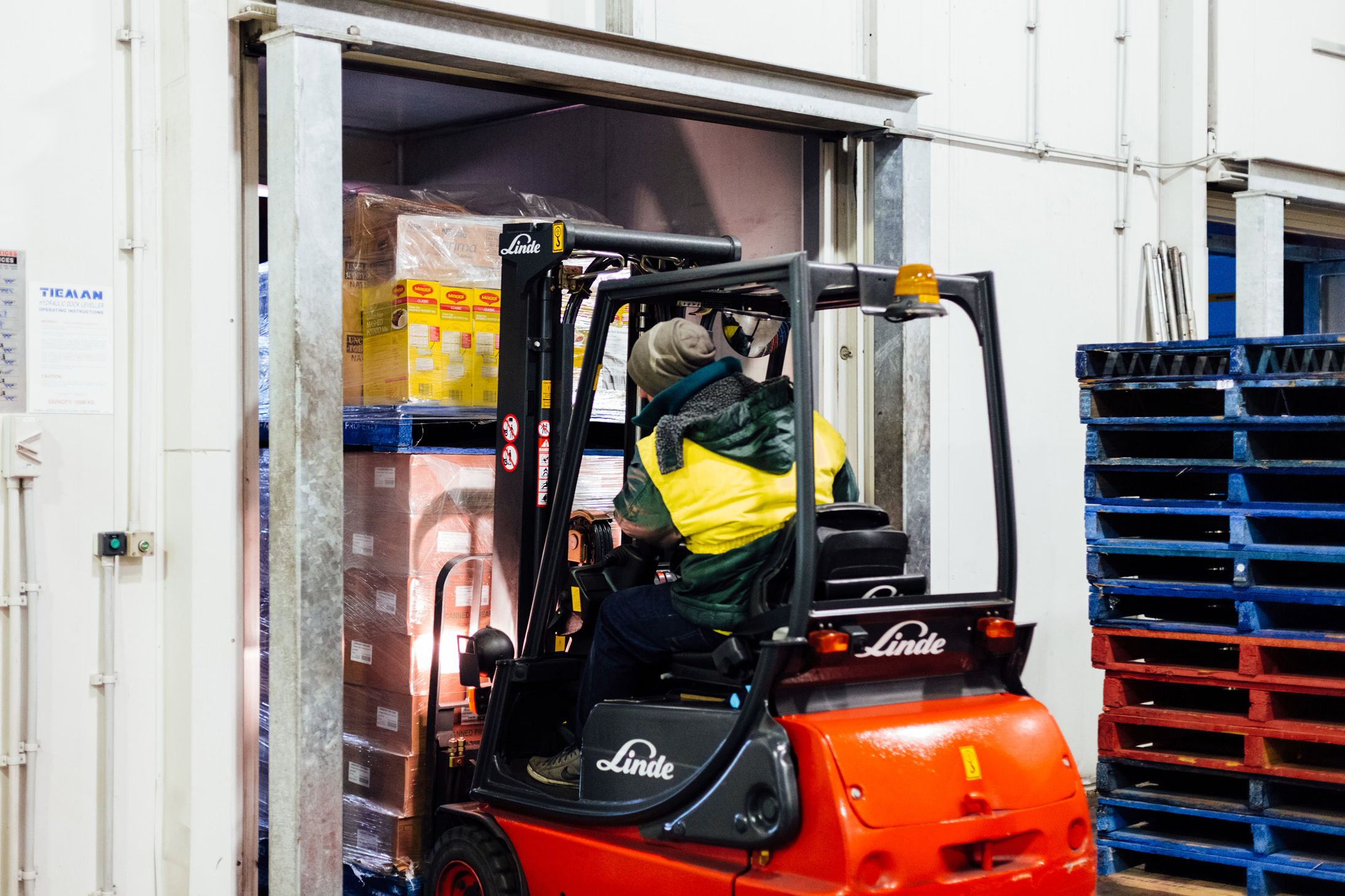

For businesses handling food, fresh produce, and other temperature-sensitive goods, getting freight from one location to another is only part of the challenge. The product must also remain within its required temperature range throughout the journey.
That is where cold chain logistics plays an important role.
Cold chain logistics involves coordinating the storage, handling, transportation, and monitoring of temperature-sensitive products to maintain their quality and safety from origin to destination. For businesses operating across Queensland and connecting with interstate supply chains, choosing the right Queensland cold chain freight provider can help reduce spoilage, protect product quality and support reliable deliveries.
Cannon Logistics has extensive experience in refrigerated freight, temperature monitoring and cold chain operations. Its current refrigerated transport service uses advanced temperature monitoring, dual-zone refrigerated trailers and company-employed drivers to protect temperature-sensitive freight during transport.
What Is Cold Chain Logistics?
Cold chain logistics is the coordinated management of products that need controlled temperatures throughout the supply chain.
Unlike standard freight, temperature-sensitive goods cannot simply be loaded onto a truck and transported without additional controls. Their condition can be affected by temperature fluctuations, loading procedures, delays, storage conditions and handling practices.
A cold chain can include:
- Product storage
- Refrigerated warehousing
- Temperature-controlled loading
- Refrigerated road transport
- Temperature monitoring
- Scheduled delivery
- Unloading and receiving procedures
- Documentation and quality control
The objective is to maintain the required conditions from the point where goods are collected through to their final destination.
For businesses transporting perishable products, a reliable refrigerated supply chain is therefore about much more than having a refrigerated truck. It requires appropriate equipment, trained people, planning, monitoring and communication.
Why Cold Chain Logistics Matters for Queensland Businesses
Queensland businesses can operate across long transport routes, regional areas and complex supply chains. For products with strict temperature requirements, every stage of the journey needs to be managed carefully.
A break in temperature control can affect:
Product quality
Fresh produce, dairy, meat and other chilled products can lose quality when exposed to unsuitable temperatures for extended periods.
Shelf life
Temperature management can help preserve the expected shelf life of perishable products and reduce avoidable waste.
Food safety
Businesses transporting food need appropriate processes to protect products from contamination and unsuitable temperature conditions.
Customer satisfaction
Retailers, foodservice businesses and other customers depend on receiving products in the expected condition and within agreed delivery windows.
Financial performance
Spoilage, rejected deliveries, damaged stock and product returns can create unnecessary costs throughout the supply chain.
Effective temperature-controlled logistics in Queensland therefore supports both product protection and day-to-day business operations.
What Products Need Cold Chain Transport?
Cold chain freight is used for a wide range of products that require controlled environmental conditions.
Depending on the product and its specific requirements, this can include:
- Fresh fruit and vegetables
- Dairy products
- Meat and poultry
- Seafood
- Frozen foods
- Prepared foods
- Ready-to-eat products
- Chilled food products
- Certain pharmaceutical products
- Other temperature-sensitive goods
Cannon Logistics specifically identifies fresh produce, dairy, meat and frozen products among the goods suited to its refrigerated transport services.
The correct transport conditions depend on the product. Businesses should establish the required temperature range and handling requirements before arranging transportation rather than assuming every refrigerated load has the same requirements.
Cold Chain Freight Requires More Than Refrigeration
One of the biggest misconceptions about refrigerated freight is that keeping a trailer cold automatically protects the product.
In reality, successful Queensland cold chain freight involves managing multiple points throughout the freight journey.
1. Pre-cooling and preparation
Products need to be prepared appropriately before loading. Depending on the commodity, this may involve pre-cooling or ensuring goods are already within the required temperature range.
Refrigerated transport equipment is designed to maintain controlled conditions. It should not be treated as a substitute for appropriate product preparation.
2. Loading
Loading practices can influence airflow, temperature stability and product protection.
Freight needs to be loaded in a way that supports the refrigeration system and avoids unnecessary exposure to unsuitable conditions.
3. Temperature control during transit
The refrigeration system needs to maintain the appropriate environment throughout the journey.
Cannon Logistics uses advanced temperature monitoring systems to monitor conditions during refrigerated transport.
4. Delivery scheduling
Time is another important part of the cold chain.
Long loading or unloading delays can create additional risks for temperature-sensitive goods. Reliable scheduling helps businesses plan collections and deliveries more effectively.
5. Receiving and unloading
The cold chain does not end when the truck reaches the destination.
Goods should be unloaded promptly and transferred into the appropriate storage environment so the required conditions can continue to be maintained.
Temperature Monitoring Is a Critical Part of Cold Chain Logistics
Temperature monitoring provides visibility into the conditions experienced by temperature-sensitive freight during transportation.
Rather than relying only on the refrigeration unit, modern refrigerated logistics operations can use monitoring technology to track internal trailer conditions throughout the journey.
Cannon Logistics states that its refrigerated fleet uses real-time temperature monitoring from pickup through delivery, while vehicle location and internal trailer temperature are tracked during transport.
This type of monitoring can help transport operators identify potential issues and maintain better oversight of temperature-sensitive freight.
For businesses, it also provides greater confidence that their freight is being managed according to the agreed requirements.
Dual-Zone Refrigerated Transport for Mixed Loads
Not every refrigerated product requires exactly the same temperature.
This can create challenges when businesses need to move different products in the same shipment.
Cannon Logistics uses refrigerated trailers with dual evaporator units, allowing multiple temperature zones within a single load.
This can be particularly useful where compatible products have different temperature requirements and need to be transported together.
However, businesses should always provide accurate product information and temperature requirements before booking. The transport provider needs to understand what is being carried so the appropriate equipment and handling procedures can be considered.
Food Transport in Queensland and the Importance of Food Safety
For businesses involved in food transport in Queensland, maintaining product temperature is only one part of safe freight handling.
Food safety also depends on appropriate procedures, equipment, documentation, hygiene and staff practices.
Cannon Logistics operates under Safe Food certification and states that its food transportation processes follow HACCP principles and internal food safety procedures.
Its quality assurance program is designed around safe, compliant and efficient logistics, including fleet maintenance and food safety procedures.
When evaluating a refrigerated freight provider, businesses should therefore look beyond the truck itself.
Ask:
- Does the provider have relevant food safety certifications?
- How are temperatures monitored?
- How is the refrigerated fleet maintained?
- Are drivers directly employed or outsourced?
- What procedures are used for temperature-sensitive freight?
- Can the provider accommodate different temperature requirements?
- How are delivery schedules managed?
- What information is available if there is a temperature issue?
These questions can help businesses identify whether a transport provider has the operational systems required for temperature-sensitive freight.
The Role of Refrigerated Logistics in the Supply Chain
Refrigerated logistics in Queensland is not limited to transportation.
A successful cold chain can involve several connected services, including:
Storage → Loading → Refrigerated Transport → Monitoring → Delivery → Receiving
If one stage is poorly managed, it can affect the entire chain.
For example, refrigerated freight may leave a temperature-controlled facility in good condition but experience an unnecessary delay during loading. Similarly, a delivery may arrive at the correct temperature but then remain outside appropriate storage conditions.
This is why cold chain logistics needs to be considered as an end-to-end process.
For businesses that require both transport and storage, Cannon Logistics also provides cold and dry storage from its Brisbane facility, supporting businesses that need to coordinate storage and freight requirements.
How to Choose a Cold Chain Freight Provider
Choosing a provider for cold chain freight requires more consideration than comparing transport prices.
Look at the refrigerated fleet
Ask what type of refrigeration equipment is available and whether it is appropriate for your products.
Ask about temperature monitoring
Find out how temperatures are monitored during transport and what happens if conditions move outside the required range.
Check food safety credentials
For food businesses, relevant certification and documented food safety procedures are important considerations.
Consider the drivers
Drivers play an important role in the practical handling of temperature-sensitive freight. Cannon Logistics employs its own drivers, which allows the company to maintain greater consistency and accountability throughout its transport operations.
Review route and scheduling capabilities
A refrigerated transport provider needs to be able to meet your collection and delivery requirements. Ask about scheduled services, regional coverage and delivery frequency.
Consider storage requirements
If your business needs storage as well as transportation, an integrated logistics provider may simplify your supply chain.
Check communication and visibility
Reliable communication matters when dealing with time-sensitive freight. Ask how you will receive updates and who you can contact if an issue occurs.
Why Scheduled Refrigerated Freight Can Benefit Businesses
Businesses with recurring freight requirements may benefit from scheduled transport rather than arranging individual shipments each time.
Scheduled services can make it easier to:
- Plan inventory movements
- Coordinate production
- Manage warehouse capacity
- Schedule customer deliveries
- Reduce uncertainty around freight
- Build consistent supply chain processes
Cannon Logistics provides scheduled refrigerated services across Brisbane and regional Queensland, including routes serving areas such as Rockhampton and Mount Isa. Its website also states that it accommodates recurring freight schedules and weekly or multiple weekly runs to many destinations.
Businesses requiring Queensland or interstate coverage should confirm the current route, frequency and availability directly with the Cannon Logistics team before booking.
Cold Chain Logistics and Regional Freight
Regional freight can introduce additional considerations for temperature-sensitive products.
Longer distances, fewer delivery windows, weather conditions, regional access and scheduling requirements can all influence the way refrigerated freight needs to be planned. Queensland's heat and humidity add further risk, as covered in Why Queensland's Climate Demands Specialist Cold Chain Expertise.
A suitable temperature controlled transport provider should understand that refrigerated freight cannot always be treated like standard dry freight.
Planning should account for:
- Distance
- Expected transit time
- Product temperature requirements
- Loading and unloading times
- Delivery windows
- Refrigeration requirements
- Monitoring requirements
- Contingency planning
The further a temperature-sensitive shipment travels, the more important consistent planning and monitoring become.
Common Cold Chain Logistics Mistakes
Businesses can reduce risk by understanding some of the common problems associated with temperature-sensitive freight.
Treating all products the same
Different products can have different temperature and handling requirements.
Failing to communicate requirements
A freight provider needs accurate information about the product, temperature requirements, quantity and delivery requirements.
Choosing a provider based only on price
The cheapest transport option may not provide the equipment, monitoring, experience or service required for sensitive freight.
Ignoring loading procedures
Poor loading can affect airflow and temperature management.
Allowing unnecessary delays
Extended loading, unloading or waiting periods can create additional temperature-control risks.
Not considering the complete supply chain
Transport is only one part of cold chain management. Storage and receiving conditions also need to be considered.
How Cannon Logistics Supports Temperature-Controlled Freight
Cannon Logistics has specialised in refrigerated transport, general freight and cold storage since 2006. The company combines refrigerated equipment, temperature monitoring, company-employed drivers and food safety processes to support businesses that depend on reliable freight.
Its refrigerated transport capabilities include:
- Advanced temperature monitoring
- Dual-zone refrigerated trailers
- Safe Food certified operations
- Company-employed drivers
- Scheduled refrigerated routes
- Real-time freight and temperature monitoring
- Refrigerated freight for fresh, chilled and frozen products
Cannon also provides general road freight and cold and dry storage, allowing businesses to coordinate different logistics requirements through the same transport provider where appropriate.
For more information about its refrigerated capabilities, see Cannon Logistics' refrigerated transport service.
Businesses can also review Cannon's quality assurance and cold chain management information to understand its approach to food safety, compliance and fleet management.
Cold Chain Logistics Checklist for Queensland Businesses
Before booking temperature-controlled freight, work through this checklist:
- Identify the exact product temperature requirements
- Confirm whether the goods are chilled, frozen or otherwise temperature-sensitive
- Confirm the required collection and delivery times
- Ask how temperatures are monitored during transport
- Check the provider's food safety credentials
- Confirm refrigerated vehicle capabilities
- Ask whether multiple temperature zones are available if required
- Provide accurate freight quantities and product information
- Confirm route availability and delivery frequency
- Ask how delays or temperature issues are handled
- Consider whether refrigerated storage is also required
- Confirm booking, tracking and proof-of-delivery procedures
Frequently Asked Questions About Cold Chain Logistics
What is cold chain logistics?
Cold chain logistics is the management of temperature-sensitive products through storage, handling and transportation while maintaining the required environmental conditions throughout the supply chain.
What is the difference between cold chain logistics and refrigerated transport?
Refrigerated transport is one component of cold chain logistics. Cold chain logistics covers the broader process, including storage, handling, temperature monitoring, transportation and delivery.
What goods require cold chain transport?
Fresh produce, dairy, meat, seafood, frozen foods and other temperature-sensitive products may require refrigerated or temperature-controlled transport depending on their specific requirements.
How are temperatures monitored during refrigerated transport?
Modern refrigerated transport can use temperature monitoring systems to track conditions inside the trailer during transit. Cannon Logistics uses real-time temperature monitoring as part of its refrigerated freight operations.
Can refrigerated trucks carry different products at different temperatures?
Some refrigerated trailers are designed for multiple temperature zones. Cannon Logistics uses dual evaporator units that allow multiple temperature zones within a single load.
Is cold chain logistics important for food transport?
Yes. Temperature management is an important part of protecting the quality and safety of temperature-sensitive food products. Businesses should also consider hygiene, handling, storage and relevant food safety requirements.
Does Cannon Logistics provide refrigerated transport in Queensland?
Cannon Logistics' current website primarily positions its refrigerated transport services across Brisbane and regional Queensland. Businesses requiring Queensland or interstate freight should contact Cannon directly to confirm current route availability and scheduling before booking.
Protect Your Temperature-Sensitive Freight
A reliable cold chain depends on more than refrigerated equipment. Businesses need appropriate planning, temperature monitoring, trained people, food safety procedures and dependable delivery schedules.
Whether you are moving fresh produce, chilled products or frozen freight, selecting a transport provider with the right equipment and operational processes can help protect product quality throughout the journey.
Cannon Logistics combines refrigerated transport, temperature monitoring, company-employed drivers, Safe Food certified operations and scheduled freight services to support businesses that rely on temperature-sensitive logistics.
To discuss your requirements, visit the Cannon Logistics contact page and speak with the team about your freight, temperature requirements and current route availability.
.webp)
%20-%20SVG%201.svg)