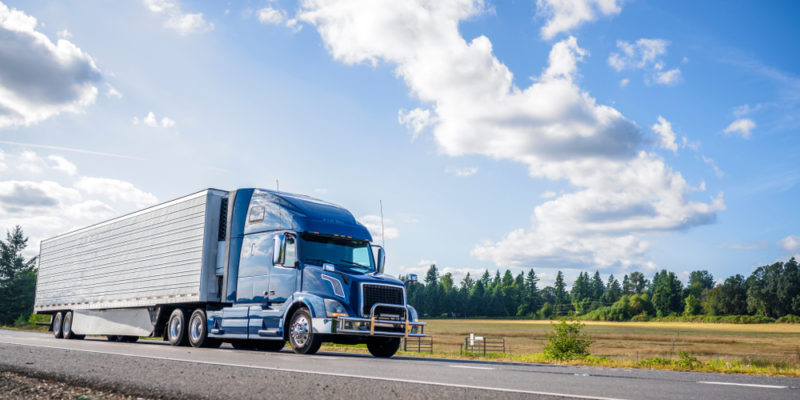
Road Freight vs. Rail: Which Is Best for Your Brisbane to Mt Isa?
If you are moving freight between Brisbane and Mt Isa, you already know this is not a simple corridor. It is 1,829 kilometres of outback Queensland, crossing some of the most remote and demanding terrain in the country. Choosing the right freight mode for this run is not just a cost question. It is a question of reliability, flexibility, and understanding what the route actually demands.
Here is a straight breakdown of how road and rail stack up on this corridor, and how to decide what is right for your freight.
Understanding the corridor
The Flinders Highway connecting Mt Isa to the coast is the lifeline for one of Australia’s most significant mining and pastoral regions. The freight moving on this corridor is genuinely mixed, ranging from mining consumables, equipment, and parts, to groceries, construction materials, general merchandise, and temperature-sensitive goods supplying remote communities and worksites. The diversity of freight types means there is no single answer that fits every operator.
Where rail has traditionally played a role
Queensland Rail’s freight network connects Brisbane to Mt Isa via Townsville, and for bulk, non-perishable freight it has historically offered a cost-effective option for high-volume shippers. Mining operations moving large quantities of consumables on predictable schedules have used rail to manage costs, and it remains an option worth understanding for operators with the right freight profile.
Rail suits you if you are moving consistent volumes of non-urgent general freight, have flexible delivery windows, and your origin and destination points are close to rail terminals. It also carries a lower carbon footprint per tonne-kilometre, which matters to businesses with sustainability reporting obligations.
Where road freight wins on this corridor
For most freight moving between Brisbane and Mt Isa, road is the more practical and reliable choice, and for several reasons that are specific to this route.
Flexibility is the biggest factor. Remote Queensland operations do not run to fixed schedules. A mine site needing urgent parts, a community store running low on stock, or a construction project requiring a top-up delivery cannot wait for the next available rail slot. Road freight moves when your business needs it to, not when the timetable allows.
Mixed freight is another key consideration. Rail requires freight to be compatible with terminal handling and container loading. Road handles palletised freight, oversized loads, loose cargo, and refrigerated product all in the same operation. If your freight mix is varied, road gives you the versatility to manage it without splitting shipments across modes.
Refrigerated and temperature-sensitive freight belongs on road. The handling requirements, terminal dwell times, and transshipment involved in rail freight on this corridor introduce unacceptable temperature risk for cold chain product. A direct refrigerated road service maintains a controlled, continuous cold chain from Brisbane to Mt Isa in a way that rail simply cannot replicate.
Door-to-door service is also a significant advantage on this route. Rail requires cartage at both ends, adding time, cost, and additional handling to every movement. For freight destined for a worksite, a remote community, or a business without terminal access, road delivers directly.
The cost question
Rail is often assumed to be cheaper, and for certain high-volume bulk movements it can be. But when you factor in terminal cartage at both ends, handling costs, and the value of time in transit, the gap is often smaller than it appears. For mixed freight in typical volumes, road is competitive on cost and significantly more practical.
The honest calculation also needs to account for the cost of delays. On a remote corridor like Brisbane to Mt Isa, a missed or delayed delivery is not just an inconvenience. It can halt a worksite, disrupt a supply chain, or leave a community store short of essentials. Reliability has a dollar value, and it needs to factor into any freight mode comparison.
Making the call
If your freight is time-sensitive, temperature-controlled, mixed in type, or destined for a location without direct rail access, road is the right answer for the Brisbane to Mt Isa corridor. If you are moving large, predictable volumes of non-perishable bulk freight with flexible timing and full terminal access at both ends, rail is worth pricing.
At Cannon Logistics, we know this corridor. We run dedicated services connecting Brisbane to Mt Isa with a fleet equipped to handle the demands of remote Queensland freight, whatever that freight looks like. If you want to talk through what your operation needs on this run, get in touch.